

Oncology

< Back

Overview

The Oncology research area is composed by nine groups addressing the principal unsolved issues in cancer. Their research covers fields such as child and adolescent cancer, melanoma, Gynecology, Urology, cancer stem cells and the molecular mechanisms of the tumor pathologies.

There are also three groups from the CIBBIM-Nanomedicine. These groups study the use of nanotechnology in biomedical applications to improve therapeutic strategies and diagnostics.

Publications

125
total
725.353
impact factor
5.803
average impact factor
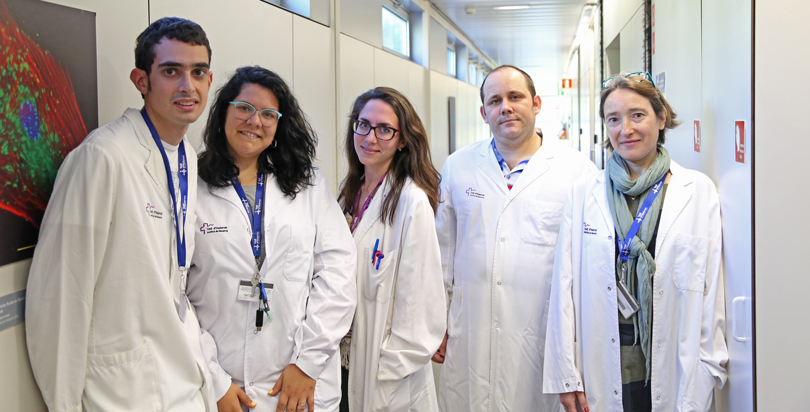
Group Leader: Matilde E. Lleonart

Our results show that i) cytoplasmic p62 and PTOV1 can be considered prognostic markers in laryngeal cancer, ii) the acquisition of resistance seems to be related to PTOV1 and autophagy-related protein overexpression, iii) by increasing autophagy, PTOV1 might contribute to resistance in this model and iv) the expression of autophagy-related proteins could classify a subgroup of HNSCC patients who will benefit from a therapy based upon autophagy inhibition. Overall, autophagy inhibition with can be a promising strategy for HNSCC patients, particularly those with high resistance to the cisplatin treatment that in addition have autophagy upregulation.

To propose that autophagy inhibition in combination with antibiotics is effective therapy against CSCs

We have provided the first in vivo evidence demonstrating that bactericidal antibiotics used in combination with autophagy blocker decrease tumor growth. This study puts mitochondria in a spotlight for cancer therapy and places antibiotics as effective agents for eliminating CSCs and resistant cells.

VHIR Annual Report 2018